Help! My Breastfed Baby Won't Take a Bottle
You're not alone. Bottle refusal is one of the most stressful challenges for breastfeeding families. This gentle, step-by-step guide is here to help you and your baby find a happy solution, together.
You've successfully established a beautiful breastfeeding relationship with your baby. It's a journey of connection, nourishment, and incredible bonding. But now, the time has come to introduce a bottle—perhaps you're returning to work, need a well-deserved break, or want your partner to share in the feeding experience. You prepare the bottle with precious pumped milk, offer it lovingly to your baby, and... they refuse. They might cry, turn their head away, push it out with their tongue, or clamp their mouth shut. Welcome to the frustrating, and often panic-inducing, world of bottle refusal.
At BabieBlue.com, we understand the anxiety this can cause. It feels like a rejection, and it can throw your carefully laid plans into chaos. But take a deep breath. Bottle refusal is incredibly common, and it's not a reflection of your parenting. It's simply your baby's way of saying, "This is new, this is different, and I prefer the real thing!" This guide is designed to be your calm, supportive resource. We'll explore the 'why' behind the refusal and provide you with a toolbox of gentle, patient, and effective strategies to help your little one learn to accept—and even enjoy—this new way of feeding.
Why Do Breastfed Babies Refuse Bottles? Understanding Their World
Your baby's refusal isn't personal; it's instinctual. Understanding their perspective is the first step to finding a solution.
It's About Comfort, Not Just Food
For your baby, the breast is so much more than a source of milk. It's warmth, the sound of your heartbeat, your smell, and the ultimate comfort. A plastic nipple offers none of that. They are protesting the loss of their "happy place."
Different Mechanics
Nursing requires your baby to use their jaw, tongue, and cheeks in a complex, wave-like motion. Drinking from a bottle is a different, often more passive, oral-motor skill. They literally don't know what to do with it at first.
Flow Confusion
A typical bottle provides a fast, constant flow of milk, which can be overwhelming for a baby used to controlling the flow at the breast. This can make them gag or feel like they're drowning, creating a negative association.
Taste and Temperature
Even your own breast milk can taste slightly different after being refrigerated or frozen, due to an enzyme called lipase. The temperature might also not be exactly what they're used to. These subtle differences can be off-putting.
The 3-Pronged Strategy for Success
The key to overcoming bottle refusal is to experiment patiently with three variables: the Environment, the Equipment, and the Technique.
Strategy 1: Change the "Who, Where, and When"
Often, the problem isn't the bottle itself, but the context. Your baby associates YOU with the breast. Your presence can be a powerful and confusing distraction.
- Let Someone Else Offer the Bottle: This is the number one most effective tip. Have your partner, a grandparent, or another caregiver be the one to offer the bottle while you are completely out of the room (and preferably out of the house). Babies are smart; if they can smell or hear you, they'll hold out for their preferred option!
- Change the Location: Try feeding in a different room than your usual nursing spot. A change of scenery can break the association and make them more open to a new experience.
- Try a Different Position: Don't hold them in the classic "cradle" nursing position. Try having them sit more upright in the caregiver's lap, facing outwards, so they can see the room.
- Offer it at the Right Time: Don't wait until your baby is frantically hungry. A screaming baby is in no mood to learn a new skill. Offer the bottle when they are calm and showing early hunger cues, not late ones.
Strategy 2: Master the Bottle & Nipple
Not all bottles are created equal. You may need to experiment to find the one your baby prefers. There is no single "best" bottle; the best one is the one your baby will take.
- Start with a Slow-Flow Nipple: This is non-negotiable for a breastfed baby. A slow-flow (Level 1 or "Newborn") nipple requires them to work for the milk, more closely mimicking breastfeeding and preventing them from being overwhelmed.
- Experiment with Nipple Shape and Material: Some babies prefer a wide, breast-shaped nipple, while others do better with a narrower, traditional shape. Silicone is most common, but some babies prefer the softer feel of a latex/rubber nipple.
- Warm the Nipple: A cold plastic nipple can be a shock. Try running the nipple under warm water for a moment before offering it to make it more inviting.
- Get the Milk Temperature Just Right: Aim for body temperature. Some babies are very particular. Test a drop on your wrist; it should feel neutral, neither hot nor cold.
Strategy 3: Perfect the Technique
How you offer the bottle is just as important as the bottle itself. Shoving it in their mouth will only create a negative association. The goal is to make the bottle feel more like the breast.
- Be Patient and Playful: In the beginning, don't even try to feed. Let your baby explore the nipple. Let them hold it, chew on it, and get used to the texture without any pressure.
- Invite, Don't Force: Tickle their lips with the nipple to encourage them to open their mouth wide, just like you would for breastfeeding. Let them draw the nipple in on their own terms.
- Use Paced Bottle Feeding: This is the most important technique for any breastfed baby and deserves its own deep dive.
The Golden Rule: Paced Bottle Feeding
Paced bottle feeding is a method that mimics the natural rhythm and flow of breastfeeding. It puts the baby in control, prevents them from guzzling, and makes the transition between breast and bottle much smoother.
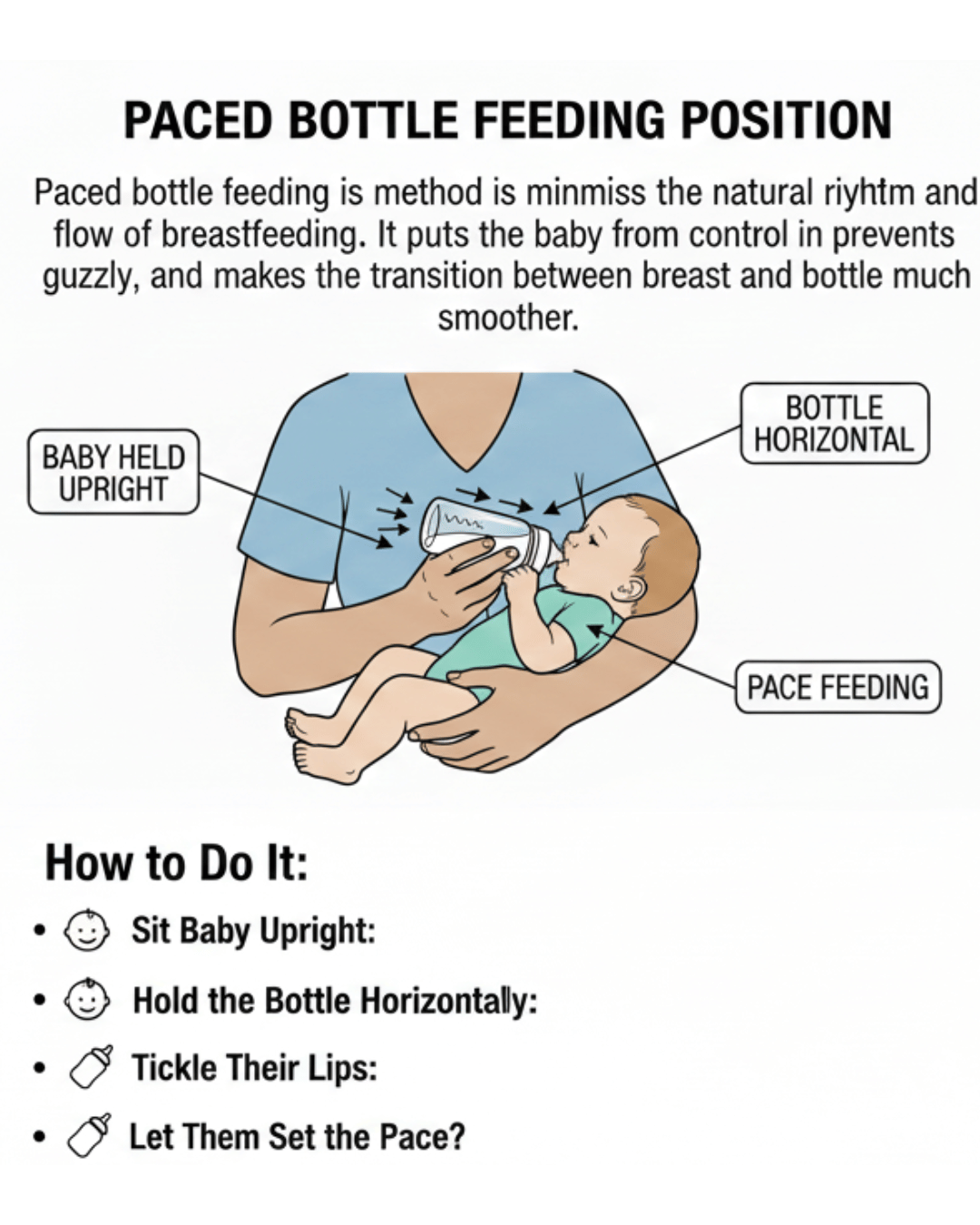
How to Do It:
- Sit Baby Upright: Hold your baby in a supported, upright position, not lying down.
- Hold the Bottle Horizontally: Keep the bottle parallel to the floor. This forces the baby to actively suck to get milk, just like at the breast.
- Tickle Their Lips: Encourage a wide gape before letting them draw the nipple in.
- Let Them Set the Pace: After 20-30 seconds of continuous sucking, gently tilt the bottle downwards to stop the flow, giving them a moment to breathe and rest.
- Watch for Cues: When they start sucking again, tilt the bottle back to the horizontal position. Repeat this cycle throughout the feed, and stop when they show signs of fullness.
Still Refusing? Take a Deep Breath and a Break.
You've tried everything, and your baby is still fighting the bottle. It's okay. Both of you are getting stressed, and that's counterproductive. The most important thing you can do now is to stop and try again another day.
Put the bottles away for a day or two. Go back to just breastfeeding and cuddling. Re-establish your happy feeding connection. A baby can sense your anxiety. Approaching the bottle again when you are both calm and relaxed will dramatically increase your chances of success. This is a journey, not a race.
Authoritative Resources from the Experts
For evidence-based information on feeding your baby, it's always best to turn to trusted medical and lactation authorities.
American Academy of Pediatrics (AAP) - HealthyChildren.org Explore the AAP's official advice for parents on transitioning from breast to bottle, including tips on timing and technique. La Leche League International - Bottle Feeding a Breastfed Baby A comprehensive guide from one of the world's leading breastfeeding advocacy groups, with a strong focus on paced bottle feeding to support the breastfeeding relationship.Frequently Asked Questions
Most lactation consultants recommend waiting until breastfeeding is well-established, typically around 3 to 4 weeks of age. Introducing a bottle too early can sometimes interfere with a baby's ability to latch onto the breast effectively. However, waiting too long (e.g., past 8-10 weeks) can sometimes lead to stronger bottle refusal, as the baby is more set in their ways. The 3-6 week window is often considered the sweet spot.
This is very common and can happen for many reasons! It could be a developmental phase, teething pain making the nipple uncomfortable, or simply a renewed preference for mom. Go back to basics: ensure the nipple flow is still appropriate, have someone else offer the bottle, and re-introduce it playfully without pressure.
This is likely due to high lipase, an enzyme in your breast milk. It's not harmful at all, but some babies dislike the change in taste. To fix this, you can scald the milk (heat it in a pot until you see tiny bubbles around the edge, but don't boil) before cooling and storing it. This deactivates the lipase. Try offering a bottle of fresh, un-refrigerated milk first to see if taste is the issue.
Don't despair! There are other ways to feed a baby. Depending on their age and dexterity, you can explore using a sippy cup, a straw cup, an open cup, or even a syringe (for very young infants) to provide milk. It's a good idea to practice with these alternative methods. Consult with a lactation consultant who can provide personalized strategies for your situation.
Patience, Persistence, and a Whole Lot of Love
Overcoming bottle refusal is a testament to the power of gentle persistence. It's a dance of trial and error, of reading your baby's subtle cues, and of giving both of you grace. Remember to stay calm, celebrate small successes, and know that this is a temporary challenge. With the right tools, techniques, and a deep breath, you and your baby will find your rhythm. You've got this.